Polycarbonate Roofing
Corrugated polycarbonate roofing panels and clear roofing sheets for pergolas, patios and carports. Multiple profiles and colours, delivered Australia-wide.
Polycarbonate Roofing buying guide
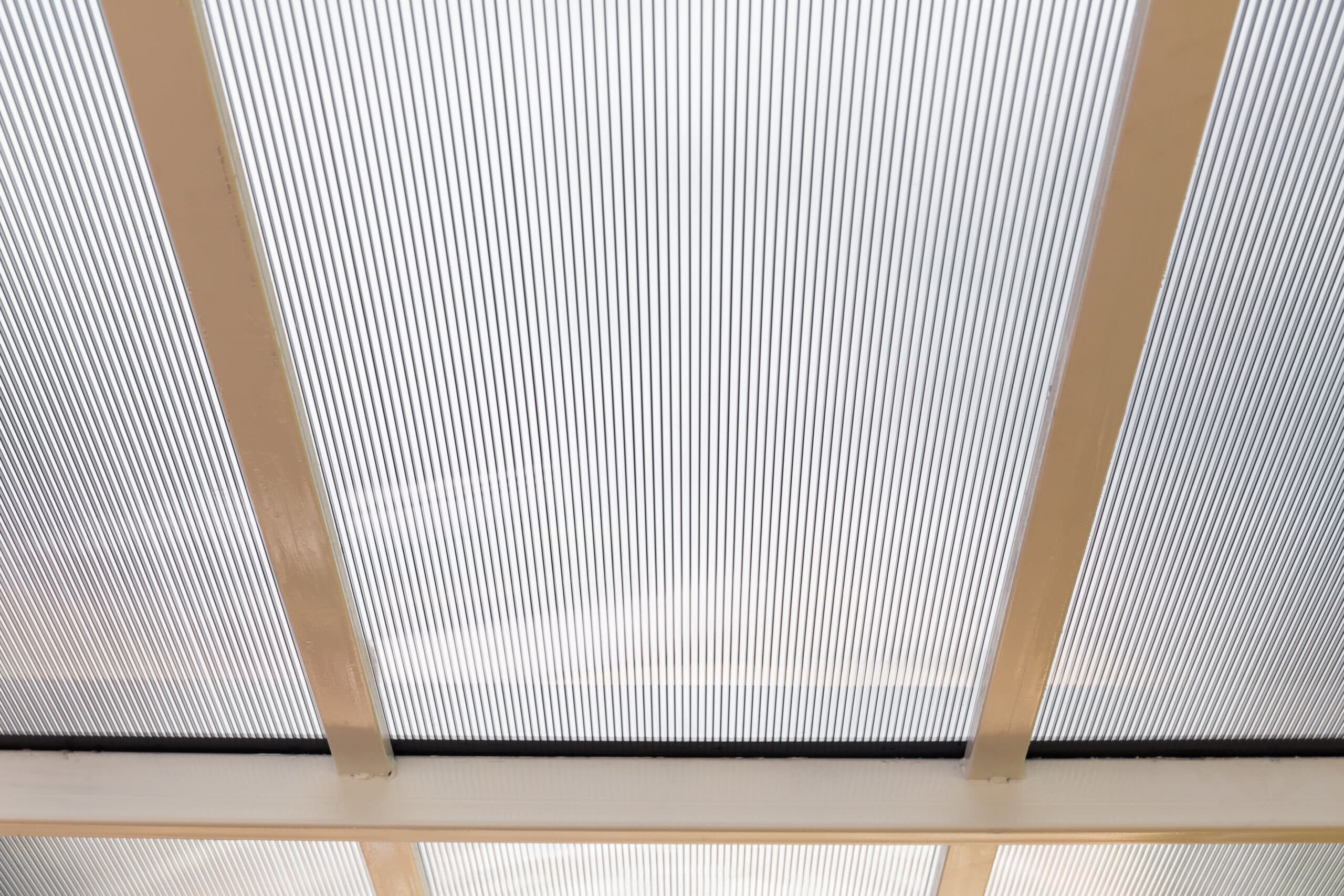
Polycarbonate roofing is what most Australians actually mean when they talk about clear roofing sheets, Laserlite or Alsynite: a corrugated or profiled translucent panel that lets daylight through a pergola, patio, carport, verandah or walkway while keeping the rain out. Associated Plastics supplies corrugated polycarbonate roofing panels and flat polycarbonate roofing sheets, cut to your run length so you are not joining sheets unnecessarily, with stock held in Hobart and delivery Australia-wide. Polycarbonate is the material of choice here because it is virtually unbreakable, roughly two hundred times more impact resistant than glass, light enough for one person to handle a full sheet, and UV protected on the weather face so it does not yellow and go brittle the way older fibreglass sheeting did. Polycarbonate roofing colours run from water clear through opal, grey and bronze tints to heat-reducing shades, and the choice makes a real difference to how usable the space underneath is in an Australian summer. The guide below covers profile matching, tint selection and correct installation.
Matching the profile to your existing roof
Corrugated roofing sheets only work if the profile matches what they are being laid alongside or fixed onto. Australian polycarbonate is produced in profiles that mirror the common metal roofing shapes, so a sheet laid next to corrugated iron nests correctly and a sheet on a trapezoidal roof follows that rib pattern. Before ordering, identify the profile on your existing roof or the batten spacing on a new frame, and measure the run length from ridge to gutter. Getting the profile wrong is the most common ordering mistake, and it cannot be fixed after the fact.
Choosing a tint
Clear transmits the most light and is the choice where the space underneath is dark and you want maximum daylight, but it also lets through the most heat and glare. Opal and diffused sheets scatter the light, which softens harsh shadows and glare while still keeping the area bright, and this is the most popular choice for patios and outdoor living areas. Grey and bronze tints cut both light and heat noticeably, suiting west-facing areas and carports where glare is the problem. Heat-reducing grades block more of the infrared while keeping visible light, which is the best option for a space you actually sit in through summer.
Installing polycarbonate roofing correctly
Three things account for most polycarbonate roofing failures. First, orientation: the sheet has a UV protected face that must go upwards, marked on the protective film, and installing it upside down will cause yellowing and cracking within a few years. Second, expansion: polycarbonate moves significantly with temperature, so fixing holes must be oversized by a few millimetres and fixed with proper roofing screws and neoprene washers, never overtightened. Third, fall: maintain a minimum pitch of around five degrees so water sheds and debris does not pond. Fix through the crest of the corrugation, not the valley, and support the sheet at the spacings specified for its thickness and profile.
Frequently Asked Questions
Let's Discuss Your Project
Whether you need custom fabrication, laser cutting or packaging supplies, our team is ready to help bring your project to life.