Aluminium Composite Panel
Aluminium composite panel (ACM) sheet cut to size for signage, cladding and shopfitting. Flat, light and rigid aluminium sandwich panel, Australia-wide.
Aluminium Composite Panel buying guide
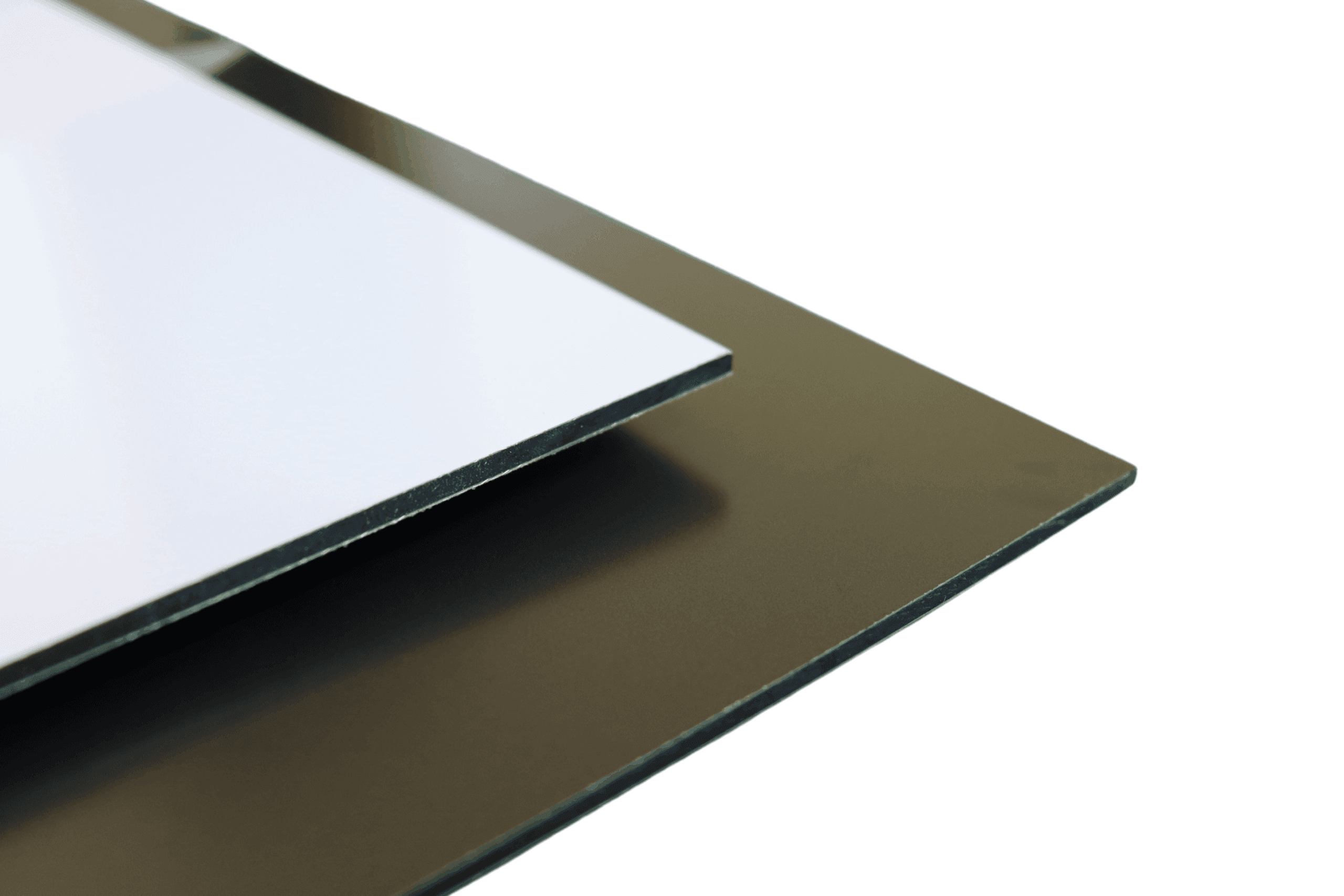
Aluminium composite panel, known interchangeably as ACP, ACM and aluminium sandwich panel, is two thin aluminium skins bonded to a thermoplastic core. That construction gives you an exceptionally flat, rigid aluminium panel at a fraction of the weight of solid sheet, which is why it dominates signage, shopfitting, display and architectural cladding work. Associated Plastics supplies aluminium composite in standard sheet and cut to size, routed to your dimensions on CNC equipment with clean edges and, where you need folded returns, V-grooved fold lines cut into the reverse face. Stock is held in Hobart and shipped Australia-wide. ACP is the panel to reach for when corflute is not durable enough and solid aluminium is too heavy or too expensive: it stays dead flat over large spans, takes vinyl and direct print beautifully, and holds up outdoors for many years. The sections below cover panel construction, thickness selection, and how to fold and fix ACP without damaging the skins.
How aluminium composite panel is built
A typical ACP sheet has 0.3 mm aluminium skins bonded either side of a polyethylene or mineral-filled core, giving a total thickness of 3 mm or 4 mm. The sandwich construction is what delivers the performance: the separated skins resist bending far better than the same weight of solid metal, so the panel stays flat over large areas without the oil-canning you get from thin sheet aluminium. Faces come pre-finished, most commonly in white, with a protective film that stays on until installation. Core types differ in fire performance, and where a panel is going onto a building facade the specification is a matter for the project fire engineer and the relevant building code, not a general recommendation.
Thickness and where each is used
3 mm ACP is the signage and display standard: light enough to hang and handle easily, stiff enough for panels up to a couple of metres with edge support, and the cheapest per square metre. 4 mm is the cladding, shopfront and architectural thickness, noticeably stiffer over long spans and better where the panel is folded into a tray or box shape. For anything that will be walked past, leaned on or exposed to wind load, go to 4 mm.
Cutting, folding and fixing
ACP routers cleanly and can be sawn with fine-tooth blades, though CNC routing gives a far better edge on visible work. To fold a panel, a V-groove is machined into the reverse skin and core, leaving the front skin intact, and the panel then folds crisply along that line to form returns and trays. Fix through oversized holes or slots rather than tight ones, because aluminium moves with temperature and a rigidly pinned panel will bow. Leave the protective film on through fabrication and installation, then peel it within a few months so it does not bake onto the surface.
Frequently Asked Questions
Let's Discuss Your Project
Whether you need custom fabrication, laser cutting or packaging supplies, our team is ready to help bring your project to life.