Adhesives and Polish
Weld-On 3 and 16 acrylic solvent cements plus acrylic polish and applicators. The right plastic adhesive for clean joins, delivered Australia-wide.
Adhesives and Polish buying guide
Getting a plastic join right is almost entirely a question of using the correct adhesive, and for acrylic that means solvent cement rather than glue. Associated Plastics stocks the Weld-On range, the cements our own fabricators use every day: Weld-On 3 as a water-thin capillary cement for clean, close-fitting joins, and Weld-On 16 as a thickened, gap-filling acrylic cement in a tube for joints that are not perfectly mated. Alongside them we carry acrylic polish for finishing machined edges to a clear, professional shine, plus needle applicators and syringe bottles for laying capillary cement accurately. Solvent cement does not glue in the conventional sense: it softens both faces so the acrylic fuses into a single piece, which is why a well-made joint is as strong as the parent material and almost invisible. That also explains why the same product will not touch polyethylene or polypropylene. The guidance below covers which Weld-On to reach for, how to lay a capillary joint properly, and what these cements will and will not bond.
Weld-On 3 and 16: which one for the job
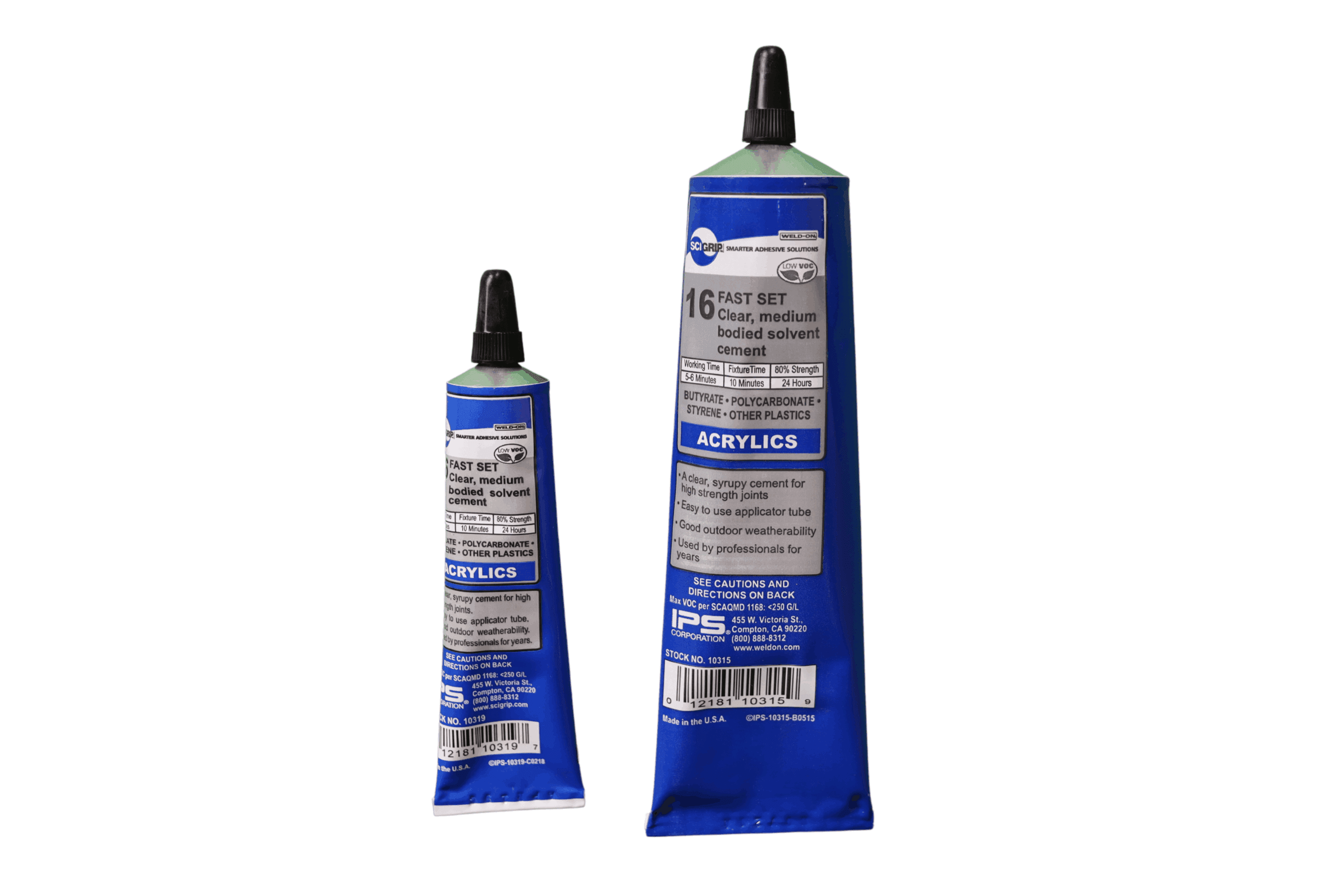
Weld-On 3 is a fast, water-thin capillary cement. It runs straight into a close-fitting joint from a needle applicator, grabs in under a minute and is the standard choice for display cases, boxes and any join where the two faces mate cleanly. Weld-On 16 is a thickened, syrupy cement supplied in a tube. It fills gaps, holds on vertical and overhead joins, and is the one to use where edges are not square, where you are bonding to a non-porous surface, or where you need a visible fillet. As a rule: 3 for clean capillary joins on acrylic, 16 for gaps, awkward angles and repairs.
Making a capillary joint that holds
Joint quality decides strength far more than the cement does. Both faces must be square, clean and dry, and edges should be saw-cut or machined rather than flame polished, because a flame-polished surface carries stress and bonds poorly. Dry-fit the parts and hold them with light clamping or tape, then run the needle applicator along the seam and let capillary action draw the cement through the full joint. Do not clamp hard: too much pressure squeezes the softened material out and starves the join. Handle the piece after a few minutes, leave it undisturbed for a couple of hours, and allow 24 to 48 hours before loading it. Work in a well-ventilated space, as these solvents are volatile and the fumes should not be breathed.
What solvent cements will not bond, and polishing
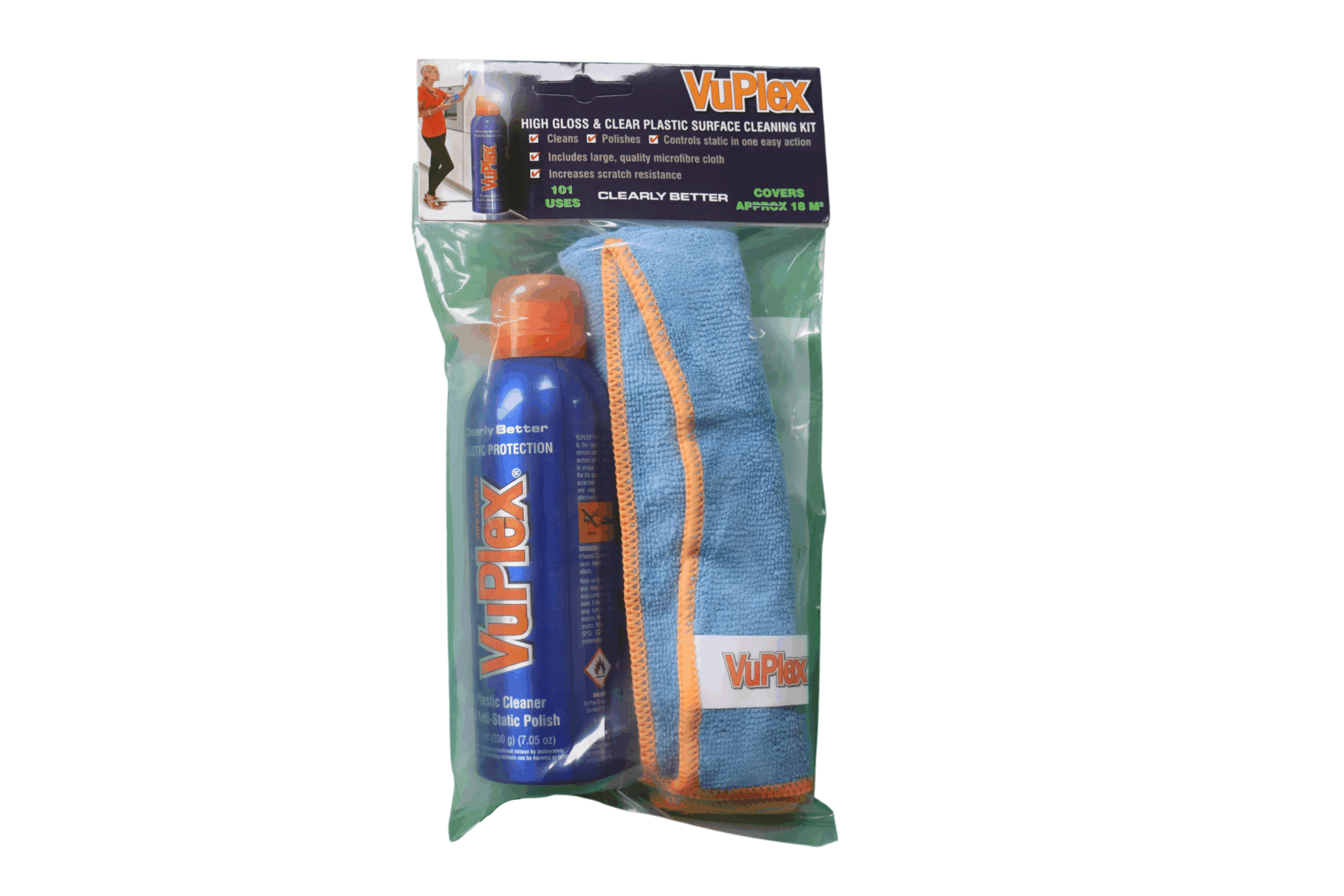
Acrylic solvent cements work on acrylic and bond well to several other rigid plastics including PVC, styrene and ABS. They will not bond polyethylene, polypropylene or HDPE at all, because those materials have too low a surface energy for the solvent to attack: those parts must be plastic welded instead. Polycarbonate can be cemented but does not fuse the way acrylic does, so joins are weaker and mechanical fixing is often better. For finishing, a staged acrylic polish brings machined or sanded edges back to clarity after cutting: work through the stages with a clean soft cloth for a professional finish. Never clean acrylic with ammonia-based glass cleaner or solvent, which will craze the surface.
Frequently Asked Questions
Let's Discuss Your Project
Whether you need custom fabrication, laser cutting or packaging supplies, our team is ready to help bring your project to life.