Adhesive & Polish
Adhesive & Polish
Acrylic Adhesive and Polish – Professional Bonding and Finishing Products
Achieving clean, strong, invisible joints in acrylic and other plastics requires the right adhesive and technique. Associated Plastics Tasmania supplies a complete range of acrylic cements, adhesives, and polishing compounds for professional fabricators, sign makers, and DIY enthusiasts across Tasmania and Australia.
Types of Acrylic Adhesive
Solvent Cement (Water-Thin)
Solvent cement is the most common method for bonding acrylic to acrylic. It works by chemically softening the acrylic surfaces at the joint, allowing them to fuse together as the solvent evaporates. The result is a strong, optically clear bond that is virtually invisible when done correctly.
Best for: Edge-to-edge and edge-to-face joints in clear acrylic, display cases, aquariums, sign letters, and precision fabrication work.
Application: Applied with a syringe or applicator bottle using capillary action. The joint surfaces must be precisely fitted with no gaps, as solvent cement does not fill voids.
Two-Part Acrylic Adhesive
Two-part adhesives (resin + hardener) provide a gap-filling bond suitable for joints that are not perfectly flush. They cure through a chemical reaction rather than solvent evaporation, creating a strong structural bond. Available in water-clear and tinted formulations.
Best for: Structural joints, gap-filling applications, bonding acrylic to other materials (metal, wood, stone), larger fabrication projects where perfectly flush joints are difficult to achieve.
Contact Adhesive and General-Purpose Glue
For bonding acrylic to dissimilar materials (fabric, foam, timber, metal), contact adhesives and specialist plastic-compatible glues are available. These do not provide the optical clarity of solvent cement but offer versatile bonding across different material combinations.
Polishing Compounds
Why Polish Acrylic?
When acrylic is cut with a saw or CNC router, the cut edge is typically rough or frosted. Polishing restores the edge to crystal clarity, giving a professional finish essential for display work, furniture, and premium fabrication.
Types of Polish
- Cutting Compound – coarse polishing paste used as the first stage of finishing a freshly cut acrylic edge.
- Finishing Polish – fine polishing compound that produces a high-gloss, optically clear finish after cutting compound has removed the initial roughness.
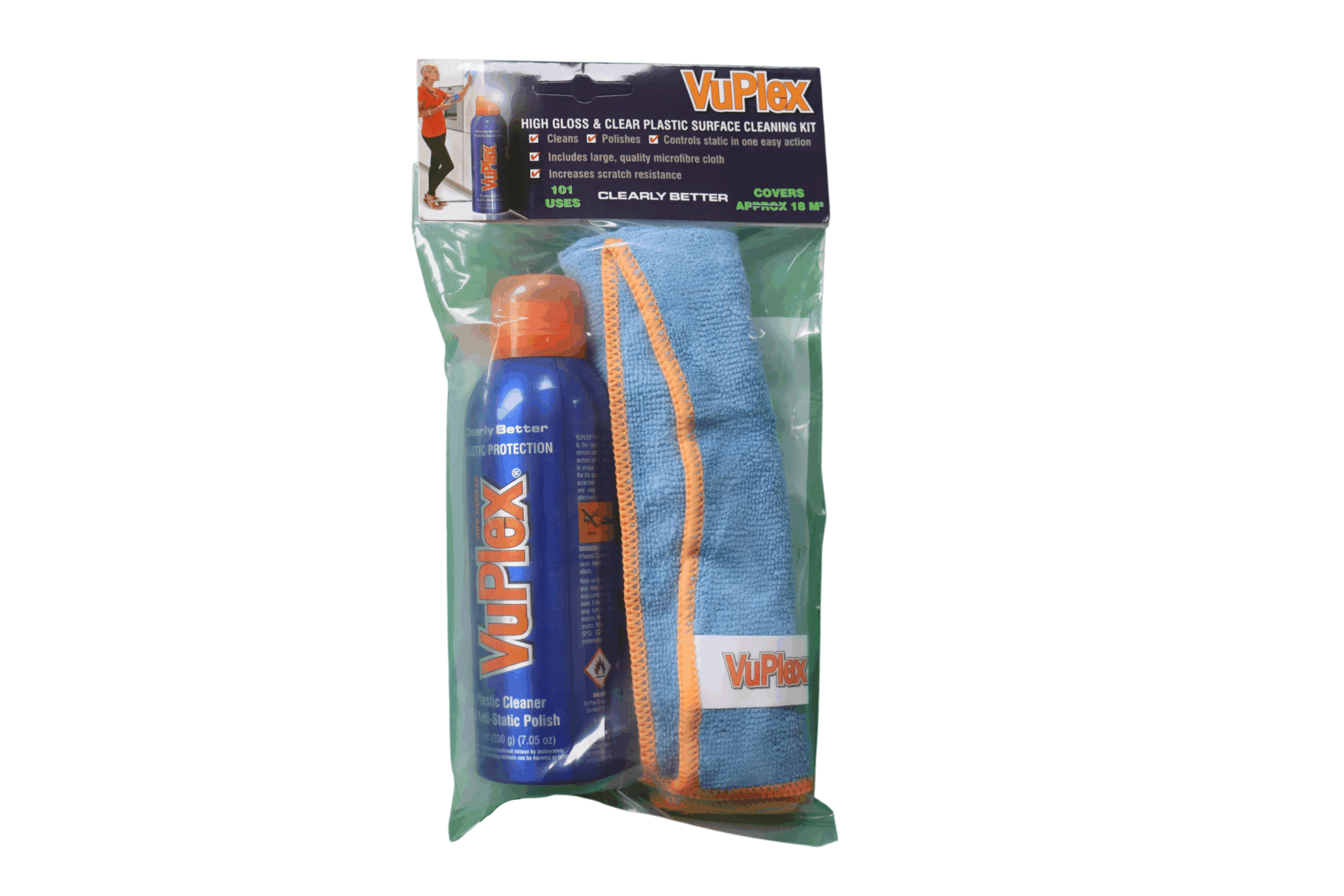
- Anti-Static Cleaner – speciality cleaner that removes dust and static charge from acrylic surfaces without scratching.
Application Guide: Solvent Cementing Acrylic
- Prepare the surfaces – ensure joint surfaces are cleanly machined and free from dust. Do not touch joint surfaces with bare fingers (oils cause clouding).
- Fit and align – dry-fit the pieces to ensure precise alignment. Use masking tape to hold pieces in position.
- Apply solvent – use a syringe or applicator bottle to apply solvent cement along the joint line. Capillary action will draw the solvent into the joint.
- Allow to cure – initial set occurs within minutes, but full strength develops over 24-48 hours. Do not stress the joint during curing.
- Clean up – any excess solvent will evaporate naturally. Do not wipe wet solvent as this will smear and damage the acrylic surface.
Safety Information
Acrylic solvents and adhesives contain volatile chemicals. Always:
- Work in a well-ventilated area or use extraction
- Wear appropriate PPE (nitrile gloves, safety glasses)
- Keep away from heat sources and open flames
- Store in a cool, dry place away from direct sunlight
- Follow the safety data sheet (SDS) for each product
Which Adhesive for Which Material?
- Acrylic to acrylic – solvent cement (best clarity) or two-part adhesive (gap-filling)
- Acrylic to metal – two-part acrylic adhesive or epoxy
- Acrylic to wood – two-part adhesive or quality construction adhesive
- Polycarbonate to polycarbonate – specialist polycarbonate adhesive (not acrylic solvent)
- PVC to PVC – PVC solvent cement
- HDPE/Polypropylene – these materials are difficult to bond with adhesive; welding is recommended
Tips for Clean Acrylic Joints
- Use laser-cut edges where possible – they require minimal preparation
- Sand machine-cut edges flat with progressively finer grits before cementing
- Mask adjacent surfaces with quality masking tape to protect from solvent runs
- Practice on offcuts before working on your final piece
- Use the minimum amount of solvent needed – excess causes bubbling and crazing
Why Choose Associated Plastics Tasmania?
- Full range of acrylic adhesives and polishing products
- Expert advice on the right product for your application
- Professional-grade products used in our own fabrication workshop
- Technical support for bonding and polishing techniques
- Competitive pricing and prompt supply
Frequently Asked Questions
What is the strongest way to bond acrylic?
Solvent cementing produces the strongest bond for acrylic-to-acrylic joints, as it chemically fuses the two surfaces together. When done correctly, the joint is often stronger than the surrounding material. For joints to other materials, two-part acrylic adhesive provides excellent structural strength.
Can I use super glue on acrylic?
We do not recommend cyanoacrylate (super glue) for acrylic. It can cause stress crazing (micro-cracks) around the joint and produces a visible bond line. Purpose-made acrylic solvent cement or two-part adhesive produces far superior results.
Do you offer bonding and polishing as a service?
Yes. As part of our custom fabrication services, we bond and polish acrylic components to produce finished assemblies. If you prefer to handle bonding yourself, we supply all the products and can provide guidance on technique.
Need adhesive or polish? Contact Associated Plastics Tasmania for product advice and ordering.
Need a Custom Order?
We specialise in custom fabrication and cut-to-size plastics. Get in touch for a tailored quote on your project.