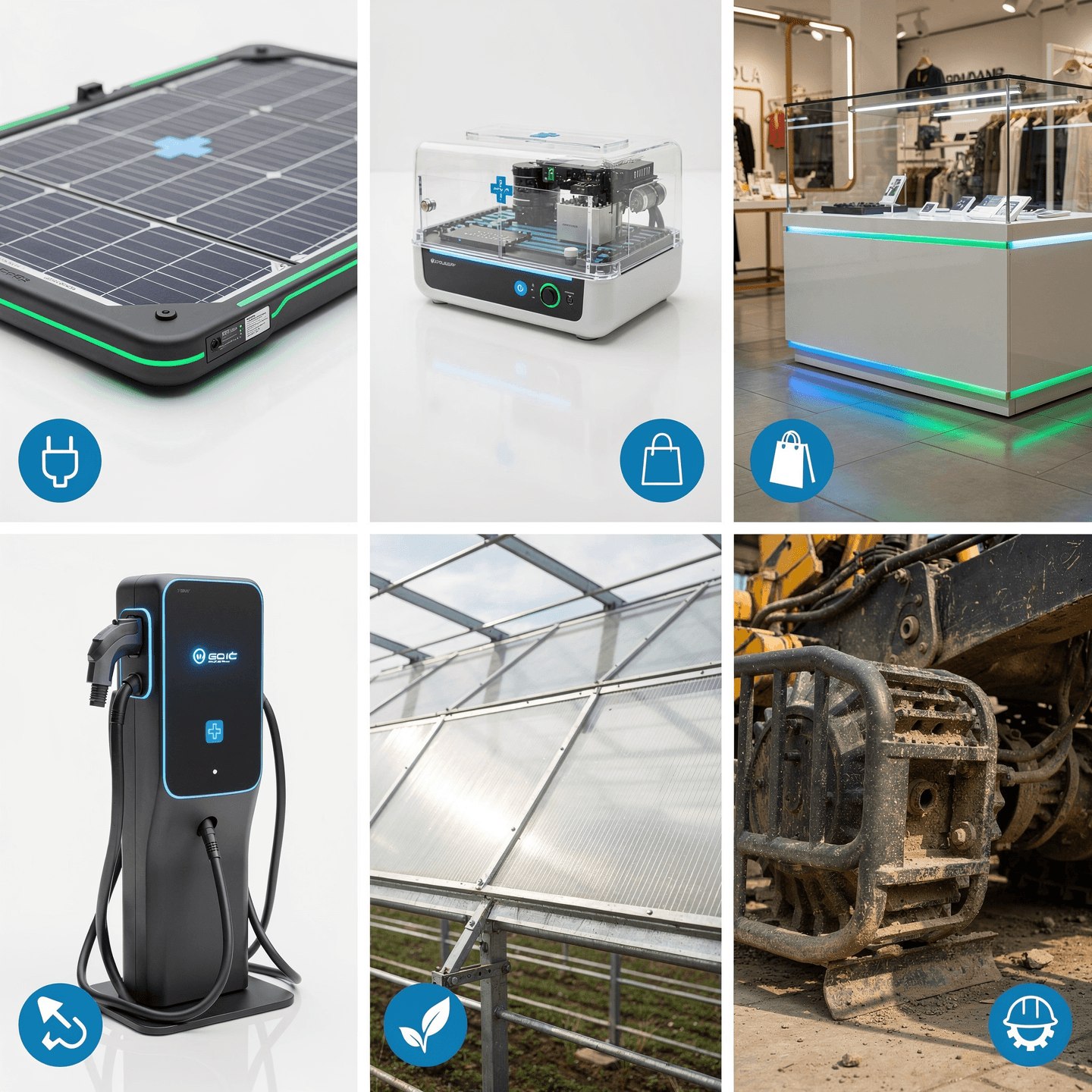
The custom plastic fabrication industry in Australia is experiencing unprecedented growth, with demand projected to increase by 7.2% annually through 2026. Industries from renewable energy to healthcare are seeking specialized plastic components, creating significant opportunities for fabricators who can deliver precision, customization, and rapid turnaround times. This article explores the ten sectors reshaping the plastic fabrication landscape and what they mean for Australian manufacturers.
1. Renewable Energy & Solar Infrastructure
The Solar Boom Creating Fabrication Demand
Australia’s renewable energy sector is accelerating rapidly, with solar installations expected to double by 2026. This growth is driving massive demand for custom plastic components:
- UV-resistant polycarbonate covers for solar panel junction boxes
- HDPE mounting brackets and cable management systems
- Acrylic protective shields for inverters and electrical components
- Custom enclosures for battery storage systems
Key Opportunity: Fabricators offering UV-stabilized materials and high-volume production capabilities are securing long-term contracts with solar installation companies across Queensland and New South Wales.
2. Healthcare & Medical Device Manufacturing
Precision Components for Critical Applications
The Australian medical manufacturing sector reached $14.8 billion in 2024, with custom plastic fabrication playing a crucial role:
- Sterilizable polycarbonate equipment housings
- Acrylic viewing windows for diagnostic machinery
- Custom PMMA surgical instrument trays
- Transparent barriers for medical environments
Compliance Note: Medical-grade fabrication requires adherence to TGA (Therapeutic Goods Administration) standards and ISO 13485 certification for quality management systems.
3. Advanced Agriculture & Controlled Environment Farming
Supporting Australia’s AgTech Revolution
Vertical farming and controlled environment agriculture are creating new fabrication opportunities:
- Transparent acrylic growing chambers for hydroponic systems
- UV-transmitting polycarbonate panels for greenhouse construction
- Custom water distribution manifolds in HDPE
- Automated feeding system components for aquaculture
Market Insight: Tasmania and Victoria are leading in controlled environment agriculture, with over 120 new facilities planned by 2026.
4. Electric Vehicle (EV) Infrastructure
Charging Networks Driving Component Demand
Australia’s EV charging network expansion requires specialized plastic fabrication:
- Weather-resistant polycarbonate housing for charging stations
- Impact-resistant protective covers for cable management
- Custom signage and display panels in laser-cut acrylic
- Vandal-proof equipment enclosures in reinforced thermoplastics
Growth Drivers: Government mandates requiring one EV charger per 75 km on major highways by 2026 are accelerating infrastructure projects.
5. Food Processing & Cold Chain Logistics
Meeting Stricter Hygiene Standards
Post-pandemic hygiene requirements and food safety regulations are driving demand for:
- Food-grade HDPE cutting boards and preparation surfaces
- Transparent acrylic sneeze guards and hygiene barriers
- Custom UHMW conveyor components for processing lines
- Chemical-resistant tank linings for food storage
Compliance Requirements: All food-contact materials must meet AS 2070 standards for food-grade plastic specifications.
6. Mining & Resources Sector Upgrades
Durable Solutions for Harsh Environments
Australia’s $295 billion mining industry requires robust plastic components that withstand extreme conditions:
- Chemical-resistant HDPE tank linings for mineral processing
- Abrasion-resistant UHMW wear strips for conveyor systems
- Transparent polycarbonate safety windows for heavy machinery
- Custom splash guards and protective shields for equipment
Competitive Advantage: Fabricators offering rapid turnaround for emergency repairs and on-site installation services are commanding premium pricing.
7. Retail & E-commerce Display Solutions
The Experience Economy Driving Innovation
Australian retail is transforming, with $41 billion in online sales driving demand for innovative display solutions:
- Modular acrylic product displays for omnichannel retail
- LED-compatible signage and illuminated showcases
- Custom point-of-sale systems with integrated technology
- Protective cases for high-value merchandise
Design Trend: Sustainable materials and recyclable displays are increasingly specified by major retailers.
8. Defence & Aerospace Components
Precision Fabrication for Critical Applications
Australia’s $48.6 billion defence industry requires specialized plastic fabrication capabilities:
- Ballistic-grade polycarbonate viewing windows
- Lightweight composite components for aircraft interiors
- Custom electronic equipment housings with EMI shielding
- Precision-machined instrument panels and control surfaces
Certification Required: Defence contracts typically require AS 9100 certification for quality management in aerospace manufacturing.
9. Smart Building & Construction Technology
IoT-Enabled Building Materials
The smart building revolution is creating opportunities for innovative plastic fabrication:
- Sensor-embedded acrylic panels for environmental monitoring
- Custom electrical enclosures for building automation systems
- Transparent cable management solutions for exposed tech infrastructure
- Acoustic dampening panels in specialized polymers
Market Size: Australia’s smart building market is projected to reach $8.2 billion by 2026, with growing demand for aesthetic tech integration.
10. Water Management & Environmental Solution
Addressing Australia’s Water Challenges
Climate adaptation and water security projects are driving fabrication demand:
- Custom rainwater harvesting system components
- UV-resistant polyethylene tanks for water storage
- Acrylic flow monitoring equipment for irrigation systems
- Chemical-resistant parts for water treatment facilities
Government Investment: Federal and state water infrastructure funding exceeding $13 billion through 2026 is creating sustained demand.
Strategic Positioning for Growth Industries
Key Success Factors for Fabricators
To capitalize on these opportunities, plastic fabrication businesses should focus on:
Diversification Strategy: Don’t rely on a single industry. Target 3-5 complementary sectors to balance revenue streams and mitigate risk.
Compliance Investment: Industry-specific certifications (ISO 13485 for medical, AS 9100 for aerospace) unlock premium contracts.
Material Expertise: Deep knowledge of material properties for specific applications creates competitive differentiation.
Rapid Prototyping: The ability to move from concept to production quickly is increasingly valued by innovation-driven industries.
Future-Proofing Your Fabrication Business
The industries outlined above represent over $180 billion in combined market value across Australia, with plastic fabrication playing an increasingly critical role. Success in 2026 and beyond requires:
- Technology adoption through CNC automation and laser cutting capabilities
- Sustainability credentials with recycled material offerings and waste reduction
- Collaborative partnerships with design engineers and industry specialists
- Geographic positioning near industry clusters and major infrastructure projects
The fabrication businesses that invest in capabilities aligned with these high-growth industries today will capture the premium opportunities emerging throughout 2026.
Frequently Asked Questions
What plastic materials are most in demand across these growth industries?
Polycarbonate leads for durability and impact resistance (defense, machinery), followed by food-grade HDPE for agriculture and food processing, and UV-stabilized acrylics for outdoor applications in solar and EV infrastructure. Medical applications require specialized biocompatible grades meeting TGA standards.
How can small fabrication businesses compete in high-tech industries like aerospace and medical?
Focus on specialization rather than volume. Obtain relevant certifications (ISO 13485, AS 9100), invest in precision equipment like CNC routing, and build relationships with local design engineers. Many large contracts require Australian-made components, giving local fabricators an advantage.
What certifications are essential for entering regulated industries?
Medical devices require TGA compliance and ISO 13485 certification. Aerospace demands AS 9100 quality management. Food contact applications need AS 2070 compliance. Defence contracts often require security clearances and facility certifications. Start with ISO 9001 as a foundation and add industry-specific certifications based on target markets.
How is sustainability affecting custom plastic fabrication opportunities?
Major industries now prioritize recycled content, with retailers seeking 50%+ post-consumer recycled materials. Solar companies want end-of-life recyclability commitments. This creates opportunities for fabricators offering recycled acrylic, rPET, and closed-loop manufacturing. Government contracts increasingly include sustainability criteria in tender evaluation.
What lead times should fabricators target for these high-growth industries?
EV infrastructure and renewable energy projects often require 2-4 week turnarounds for standard components. Medical and aerospace allow longer lead times (6-8 weeks) but demand zero-defect quality. E-commerce retail needs rapid prototyping (3-5 days) with scalability to production runs. Emergency mining repairs command premium pricing for 24-48 hour delivery.
About the Author: This article draws on industry research, Australian Bureau of Statistics manufacturing data, and insights from leading fabrication businesses operating across multiple growth sectors in Tasmania, Victoria, and Queensland