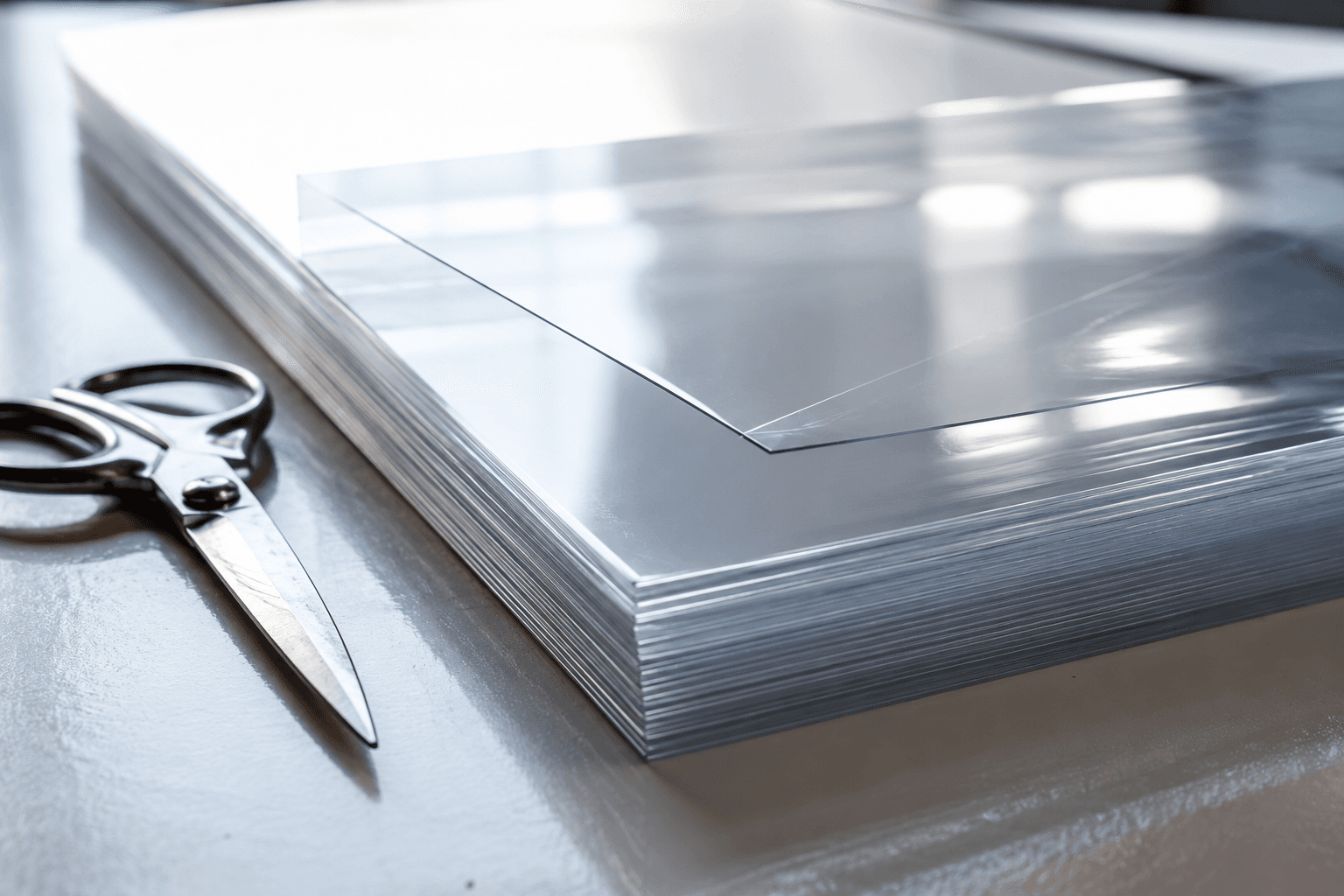
Clarifoil is a premium branded cellulose diacetate film known for exceptional clarity, gloss, and certified biodegradability, making it the preferred choice for retail packaging, window cartons, and display work. Standard acetate film offers similar core properties at a lower cost and is a solid choice for general craft, stationery, laser cutting, and prototyping where certification and optical perfection aren’t critical. If your project is customer-facing or premium packaging, choose Clarifoil. If it’s a workshop, craft, or internal-use project, standard acetate will do the job for less.
What Is Acetate Film Made From?
Acetate film is made from cellulose diacetate, a plant-based polymer derived from wood pulp. It’s naturally clear, resistant to UV yellowing, and has been used since the early 1900s — originally as a safer alternative to flammable nitrate film in photography. Today it’s the material of choice anywhere you need a flexible, glass-clear sheet that isn’t a true plastic derived from petroleum.
What Is Clarifoil?
Clarifoil is a trademarked cellulose diacetate film manufactured by Celanese in the UK. It’s produced in thicknesses from 14 microns up to 500 microns, in clear, matte, and semi-matte finishes. Clarifoil is widely used for window cartons in packaging (think pasta boxes, perfume boxes, and confectionery), presentation folders, and high-end retail display work where optical clarity and finish quality matter. It also carries recognised biodegradability and home-compostability certifications, which standard uncertified acetate typically doesn’t.
What Is Standard Acetate Film?
“Standard acetate film” refers to generic, non-branded cellulose acetate or diacetate film, produced by various manufacturers without the same certification or quality-control documentation as Clarifoil. It shares the same base chemistry and general look — clear, glossy, flexible — but with more variation in thickness consistency, gloss level, and long-term stability batch to batch. It’s commonly used for craft projects, stationery, laser-cut jewellery and hair accessories, book covers, and short-run prototyping.
Clarifoil vs Standard Acetate Film: Side-by-Side Comparison
| Feature | Clarifoil | Standard Acetate Film |
|---|---|---|
| Clarity & gloss | Very high, consistent | Good, can vary by batch |
| Thickness range | 14–500 microns | Typically 100–500 microns |
| Biodegradability certification | Yes (OK Compost Home accredited on select gauges) | Usually uncertified |
| Batch consistency | Tightly controlled | More variable |
| Best for | Retail packaging, window cartons, premium display, brand-facing work | Craft, stationery, laser cutting, prototypes, internal use |
| Cost | Higher | Lower |
| Scratch resistance | Excellent | Good |
Which One Should You Choose?
Choose Clarifoil if:
- The film will be visible to your end customer (window cartons, retail packaging, POS display)
- You need documented biodegradability for sustainability claims or compliance
- Consistency across a large production run matters
Choose standard acetate film if:
- You’re laser cutting or die-cutting for craft, jewellery, or short-run projects
- The film is for internal, workshop, or prototyping use
- Budget is the primary driver and slight batch variation is acceptable
How to Order Acetate Film from Associated Plastics
Associated Plastics supplies both premium and standard-grade acetate film cut to your exact specifications. Whether you need window-carton-grade Clarifoil for a packaging run or standard acetate for laser cutting and prototyping, our Tasmania-based team can advise on the right gauge, finish, and quantity for your project — and get it cut and dispatched fast, Australia-wide.
FAQs
Is Clarifoil the same as acetate? Clarifoil is a specific branded type of cellulose diacetate film. All Clarifoil is acetate film, but not all acetate film is Clarifoil.
Is acetate film biodegradable? Cellulose acetate is inherently biodegradable due to its plant-based origin. Clarifoil carries independent certification confirming this; uncertified standard acetate is generally biodegradable too but without documented proof.
Can acetate film be laser cut? Yes, both Clarifoil and standard acetate film laser cut cleanly, producing crisp, polished edges — a key reason they’re popular for jewellery, hair accessories, and fine display pieces.
What thickness of acetate film should I use for packaging windows? Window cartons typically use 250–350 micron acetate for rigidity and clarity, though thinner gauges work for smaller or lighter packaging.
Does acetate film yellow over time? Acetate film has good inherent UV resistance and does not yellow as readily as some plastics, though prolonged direct sunlight exposure can still affect it over the long term.
Need acetate film cut to size? Get a quote from Associated Plastics — Tasmania’s trusted supplier of custom plastic sheet, film, and fabrication services, serving businesses across Australia.